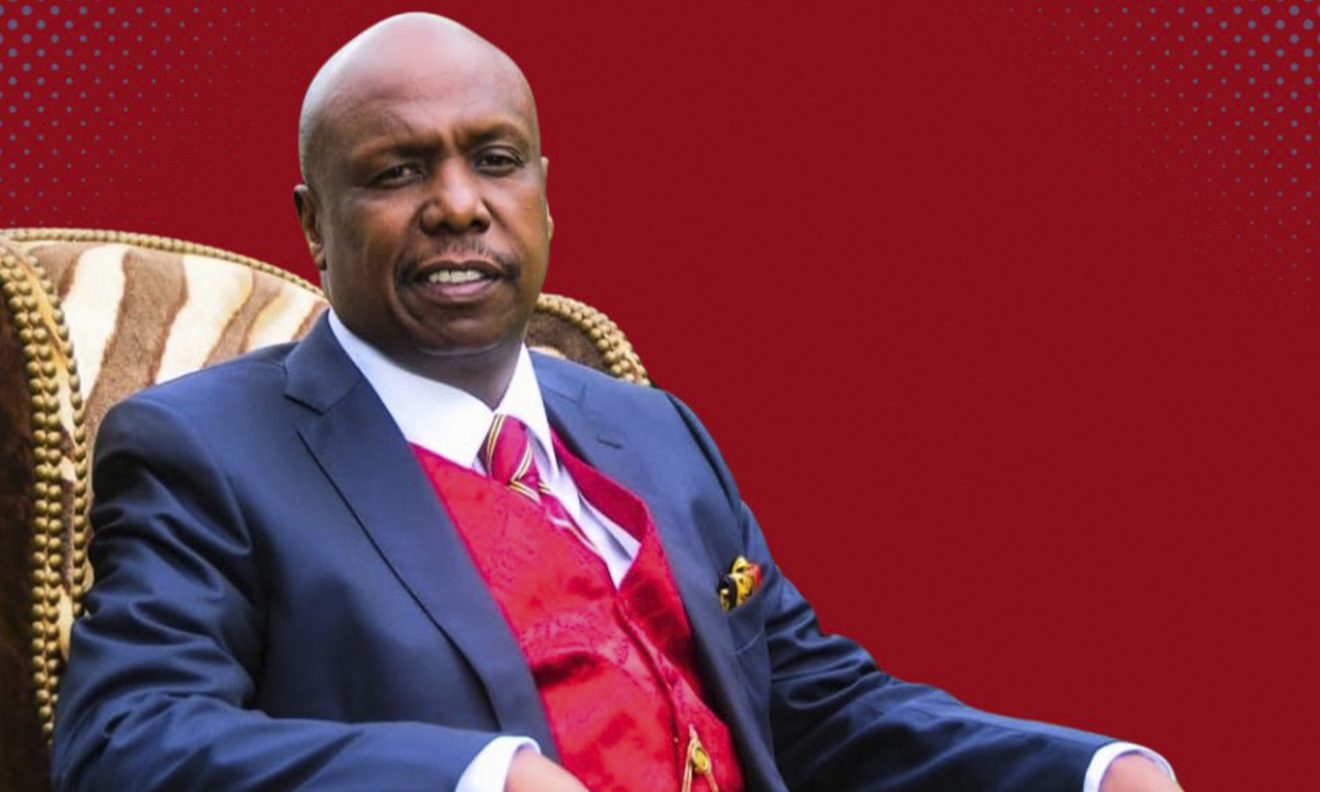
Gideon Moi Breaks Silence, Accuses Ruto of Betrayal as Rift Valley Political Battle Intensifies Ahead of 2027
Peter Mukabi26 Oct 2026
Share
KANU leader Gideon Moi has reignited the political contest for control of the Rift Valley region after accusing President William Ruto of failing to honour a political agreement, raising fresh questions about the future of their relationship ahead of the 2027 General Election.
Moi's decision to publicly confront the President after months of political silence could complicate Ruto's efforts to consolidate his support base in the Rift Valley, a region widely regarded as one of the most important battlegrounds in Kenya's presidential elections.
The KANU leader claims that Ruto failed to honour an agreement reached on October 10, 2025, at the Kabarak residence of former President Daniel arap Moi.
According to Gideon, he agreed to cooperate with the President out of respect for the presidency, despite resistance from some of his supporters who were opposed to the political arrangement.
“Nilifanya hivyo bila kusita, licha ya upinzani kutoka kwa watu wangu,” Gideon said, explaining that he had proceeded with the arrangement despite reservations among sections of his political base.
He also appealed to residents of Baringo County to forgive him for placing his trust in the President, remarks that appeared to signal growing frustration with the direction of their political engagement.
The accusations have reopened debate about the nature of the understanding between the two political camps, particularly whether the agreement was intended to establish a lasting political partnership or was primarily aimed at securing cooperation ahead of the next General Election.
KANU-UDA Alliance Under Pressure
The agreement between Gideon's KANU and Ruto's United Democratic Alliance (UDA) had appeared to create an opportunity for political cooperation between two parties with different historical backgrounds but overlapping interests in the Rift Valley.
KANU, which governed Kenya for decades before the introduction of multiparty politics, retains historical significance in several parts of the country. Under Gideon's leadership, the party has continued to position itself as a political force capable of influencing electoral outcomes.
UDA, meanwhile, has sought to maintain and strengthen its support in the Rift Valley, which remains central to Ruto's political calculations.
The reported disagreement over the Kabarak agreement now threatens to undermine the cooperation that had appeared to bring the two parties closer.
For Gideon, the dispute presents an opportunity to reaffirm KANU's political independence and demonstrate that the party cannot simply be absorbed into another political formation without clear commitments being honoured.
For Ruto, the accusations could create an additional political challenge as he seeks to consolidate his support ahead of the 2027 polls.
However, the extent to which the disagreement will affect voter behaviour remains uncertain and will depend on how both sides manage the fallout in the coming months.
Raila Odinga's Death and the Changing Political Landscape
Political analyst Moses Kiyiapi suggested that the death of former Prime Minister Raila Odinga may have contributed to the changing political calculations surrounding the agreement.
According to Kiyiapi, Ruto may have concluded that he no longer needed Gideon's political influence after opportunities emerged to expand his reach into Nyanza, a region historically associated with Raila and his political movement.
Such a shift, if it occurred, could have altered the balance of interests that initially brought the two camps together.
Political alliances in Kenya are often shaped by calculations involving regional voting patterns, leadership influence and the distribution of political power. When circumstances change, the interests that originally sustained an agreement can also change.
Nevertheless, the suggestion that Raila's death directly influenced Ruto's relationship with Gideon remains an interpretation attributed to the analyst and should not be treated as an established explanation for the alleged breakdown.
The dispute nevertheless highlights the uncertainty that can surround political agreements when circumstances change or when the parties involved have different expectations about their future roles.
Kiyiapi Warns of Political Consequences for Ruto
Kiyiapi warned that the disagreement could have consequences for the President, particularly because the Rift Valley remains an important part of his political support base.
He argued that the timing of Gideon's public criticism could complicate Ruto's efforts to consolidate support in the region as the country moves closer to the 2027 General Election.
“That decision is now coming back to haunt the President just months before the General Election in his political stronghold, where every vote counts,” Kiyiapi said.
The analyst's remarks point to the importance of maintaining political relationships even in regions where a presidential candidate already enjoys substantial support.
A strong regional base can provide a significant electoral advantage, but political leaders must also manage competing interests among influential figures who seek recognition, representation and a role in shaping political decisions.
If the disagreement between Gideon and Ruto deepens, it could create room for other political actors to position themselves as alternatives or intermediaries in the contest for regional influence.
However, the political impact will depend on whether Gideon can translate his criticism into organised political mobilisation and whether KANU can attract voters beyond its traditional support networks.
University Professor Warns of Challenges for Ruto
University of Nairobi Professor Prestone Chitere also warned that Gideon's decision to confront the President publicly could complicate efforts to strengthen Ruto's support in the Rift Valley.
Chitere observed that the President faces political calculations extending beyond his traditional strongholds, making it important to maintain alliances that could help broaden his national support.
The dispute comes at a time when political leaders are expected to intensify consultations, strengthen grassroots networks and assess potential partnerships ahead of the next election.
For Ruto, maintaining unity among influential political figures in the Rift Valley could be important in preventing internal disagreements from weakening his electoral position.
For Gideon, publicly raising concerns over the alleged agreement could help him present himself as a leader willing to demand accountability from political partners.
The confrontation could therefore evolve into a broader contest over trust, political credibility and the terms under which parties cooperate in preparation for an election.
Whether the dispute results in a complete political break or leads to renewed negotiations remains to be seen.
Narok, Kajiado and Northern Rift Valley in Focus
The disagreement could also influence political calculations in several counties, including Narok, Kajiado, Baringo, Elgeyo-Marakwet and West Pokot.
Narok and Kajiado are particularly important because of their distinct political dynamics and the influence of local leaders, community interests and regional voting patterns.
In northern Rift Valley, counties such as Baringo and West Pokot have their own networks of political influence, while Elgeyo-Marakwet remains an important part of the broader regional contest.
Although these counties are often discussed collectively in national political analysis, voting patterns are not uniform. Local leadership, development concerns, party loyalties and individual candidates can all influence electoral decisions.
Consequently, Gideon's dispute with Ruto does not automatically translate into a loss of support for the President across the region.
Instead, the confrontation introduces another variable into the political equation, particularly if KANU succeeds in mobilising its supporters or negotiating with other political formations.
The extent of Gideon's influence will depend on the party's organisational strength, its ability to maintain unity and the support it receives from local leaders.
KANU Leaders Rally Behind Gideon
Several KANU leaders have backed Gideon's position, insisting that political agreements should be honoured and that the party's contribution to any alliance should not be taken for granted.
Former Tiaty Member of Parliament Asman Kamama defended the party's national significance, warning against underestimating its political influence as the country approaches the next General Election.
“KANU has roots across the country, and you cannot underestimate the party as we head towards the General Election,” Kamama said.
His remarks underscore KANU's determination to maintain its identity and relevance within Kenya's evolving political landscape.
The party's historical legacy gives it national recognition, although its current electoral strength must be assessed independently of its past dominance.
For KANU, the immediate challenge will be to convert its leaders' statements into a coherent political strategy capable of attracting voters and influencing negotiations ahead of 2027.
The party must also determine whether its interests are best served by pursuing an independent political path, strengthening its bargaining position or entering into new alliances with other political formations.
What the Dispute Means for the 2027 Election
The confrontation between Gideon and Ruto illustrates how political relationships can become increasingly complicated as the next General Election approaches.
For Ruto, the priority will be to protect his support base while seeking to broaden his appeal in regions where his political influence may be contested.
For Gideon, the dispute offers an opportunity to assert KANU's independence and demonstrate that the party expects clear commitments from its political partners.
The disagreement could also attract the attention of other political leaders seeking to build alliances or exploit divisions among established political camps.
However, a public disagreement does not necessarily signal the permanent collapse of a political partnership. Negotiations may still take place, and both sides could decide that cooperation remains beneficial despite their differences.
The critical question is whether the two camps can rebuild trust or whether the accusations will lead to a more prolonged political confrontation.
As the 2027 General Election approaches, the dispute is likely to place renewed attention on the role of KANU, Gideon's political ambitions and the President's efforts to maintain unity within his Rift Valley support base.
Ultimately, the electoral consequences will depend on whether the disagreement remains a war of words among political leaders or develops into a wider realignment involving parties, local leaders and voters.
For now, Gideon's accusations have introduced a fresh complication into the contest for Rift Valley political influence, reinforcing the importance of alliances, credibility and regional mobili